Microsoft Deleted the Promise. Then Broke the Software.
Microsoft quietly rewrote its own support page to remove a promise that Office 2019 would 'continue to function' — then broke it on July 13, 2026.
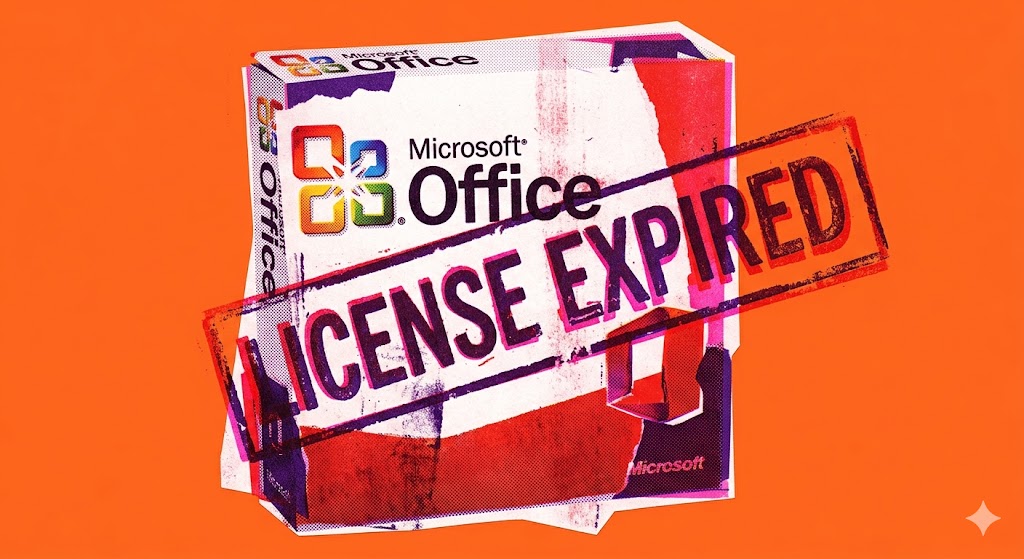
A box of Microsoft Office 2019 — software sold as a one-time purchase that Microsoft is now converting to view-only mode.
You paid for Microsoft Office once. A box, a key, a one-time purchase — the kind of transaction that used to mean something permanent. On July 13, 2026, Microsoft is converting those perpetual licences to view-only mode. You can open your files. You cannot edit them. And here's the part that should make you angry: Microsoft had a written promise on their own support page that said the apps would "continue to function" after end-of-support. That clause is gone now. They deleted it in May 2026, quietly, without announcement.
What's Actually Happening
On July 13, 2026, a license-validation certificate used by Office 2019 and 2021 for Mac expires. Apps that haven't been updated to the minimum required version (16.83 on macOS) will drop into what Microsoft calls "reduced functionality mode" — you can read files, you can't edit or save them.
Office 2021 for Mac users can update to 16.83 and escape this. Office 2019 for Mac users cannot. The app has a hard build cap that makes it technically impossible to reach version 16.83. There is no patch coming. There is no workaround Microsoft is offering. The options Microsoft presents are: accept view-only mode, use the free web apps, or pay for a Microsoft 365 subscription or a new Office Home 2024 licence.
So the solution to having your paid software broken is to pay again.
The Part They Hoped You Wouldn't Notice
When Office 2019 for Mac reached end-of-support in October 2023, Microsoft's own support page included a clear assurance: the apps would "continue to function." That was the implicit deal — no more security patches or feature updates, but the software you bought would keep working.
By May 30, 2026, that page had been re-dated and rewritten. The "continue to function" clause: removed. A new sentence pointing users to "any supported Microsoft 365 or Office product": added. Microsoft has issued no public statement reconciling the two versions of that page. No acknowledgement that a promise was made and then quietly unmade.
This is the Consumer Rights Wiki's documented account of events, and it's damning in its specificity. This isn't a misreading or a technicality — it's a company revising its own commitments retroactively, hoping nobody screenshots support pages.
This Pattern Has a Name
As someone who works in enterprise tech, I've watched the software industry spend a decade trying to convert every one-time purchase into a recurring revenue stream. What used to be a product is now a service. What used to be ownership is now access. The tools change, but the playbook is the same: make the sale, then shift the terms.
I've written about this in gaming before. Sony's 30-day online check-in requirement for PS5 digital games — a post-sale constraint that wasn't part of the original transaction. Ubisoft's position that you never owned your games to begin with — just a revocable licence dressed up as a purchase. The mechanism differs but the logic is identical: sell you something that feels permanent, then retain enough control to take it back.
The difference with Office is that this isn't a game. These are work files. Medical records. Contracts. Years of documents that people assumed they could always open because they bought the software that opens them.
What the Certificate Trick Reveals
Microsoft doesn't need to push a malicious update to break your software. They just let a certificate expire. The 1023 Jack analysis of this mechanism is unambiguous: this is remote degradation of a locally-installed, perpetually-licensed product. It means a company can sell you offline software and still retain a remote kill switch — not through malware, but through the entirely legitimate-sounding mechanism of certificate management.
The Broader Stakes
The Stop Killing Games movement has spent years arguing that digital products need the same baseline protections as physical ones — that a company shouldn't be able to reach into your home and break something you paid for. That argument was always framed around gaming because gaming gave us the clearest examples. But this is Microsoft Office. This is productivity software. The pattern is no longer confined to a single industry.
If there's a genuine case for consumer protection legislation around digital ownership, this is it. Not "you can't edit a save file." You can't edit your own documents.
If you're running Office 2019 for Mac, you now know exactly what that "perpetual licence" was worth.